Showing posts with label Iphone. Show all posts

Friday, August 24, 2012

Samsung ordered to pay Apple $1.05B in patent case


SAN JOSE, Calif. (AP) — After a year of scorched-earth litigation, a jury decided Friday that Samsung ripped off the innovative technology used by Apple to create its revolutionary iPhone and iPad. The jury ordered Samsung to pay Apple $1.05 billion in the latest skirmish of a global legal battle between the two tech giants. An appeal is expected. Apple Inc. filed its patent infringement lawsuit in April 2011 and engaged legions of the country's highest-paid patent lawyers to demand $2.5 billion from its top smartphone competitor. Samsung Electronics Co. fired back with its own lawsuit seeking $399 million.

The verdict, however, belonged to Apple, as the jury rejected all Samsung's claims against Apple. Jurors also decided against some of Apple's claims involving the two dozen Samsung devices at issue, declining to award the full $2.5 billion Apple demanded. However, the jury found that several Samsung products illegally used such Apple creations as the "bounce-back" feature when a user scrolls to an end image, and the ability to zoom text with a tap of a finger.

As part of its lawsuit, Apple also demanded that Samsung pull its most popular cellphones and computer tablets from the U.S. market. A judge was expected to make that ruling at a later time.
The outcome of the case is likely to have ripple effects in the smartphone market. After seeing Samsung's legal defeat, other device makers relying on Android may become more reluctant to use the software and risk getting dragged into court.

Tuesday, February 21, 2012

Solar Charger Sticks to Window to Power Gadgets


Solar chargers for gadgets are becoming more common, and convenient. There's the mPowerpad that charges multiple devices, for example. But for those that want a little style, there's the XDModo Solar Window Charger.

It's sleek and sticks unobtrusively to a window using silicone pads (basically suction cups). It's a good way to free up that cigarette lighter for plugging in other devices. (Does anyone actually light cigarettes with those anymore?) The charger has USB and mini-USB outputs. Odds are most people will use the USB since that's the charger end of most
smartphone cables – be they for Android, iPhone or others. The battery inside has a 1300 mAh capacity – most smartphone batteries average around 1500 mAh, so it's pretty close to the full charge. That said, after it charges up during the day, it can keep your phone going through the night, or supplement the battery when it runs low. The output is five volts at 500 milliamps, plenty for charging anything but an iPad.

The maker, Xindao, is in Europe. You can purchase it online for about $65 but you'll have to shell out for shipping to the U.S. – about $65 as well. Technews Daily 

Wednesday, October 5, 2011

Apple Founder Steve Jobs Dies

Steve Jobs

Steve Jobs, the mastermind behind Apple's iPhone, iPad, iPod, iMac and iTunes, has died, Apple said. Jobs was 56. Jobs co-founded Apple Computer in 1976 and, with his childhood friend Steve Wozniak, marketed what was considered the world's first personal computer, the Apple II. Industry watchers called him a master innovator -- perhaps on a par with Thomas Edison -- changing the worlds of computing, recorded music and communications. In 2004, he beat back an unusual form of pancreatic cancer, and in 2009 he was forced to get a liver transplant. After several years of failing health, Jobs announced on Aug. 24, 2011 that he was stepping down as Apple's chief executive.

Ipod


The highlights of Jobs's career trajectory are well-known: a prodigy who dropped out of Reed College in Oregon and, at 21, started Apple with Wozniak in his parents' garage. He was a multimillionaire by 25, appeared on the cover of Time magazine at 26, and was ousted at Apple at age 30, in 1984. In the years that followed, he went into other businesses, founding NeXT computers and, in 1986, buying the computer graphics arm of Lucasfilm, Ltd., which became Pixar Animation Studios. He was described as an exacting and sometimes fearsome leader, ordering up and rejecting multiple versions of new products until the final version was just right. He said the design and aesthetics of a device were as important as the hardware and software inside. 

In 1996, Apple, which had struggled without Jobs, brought him back by buying NeXT. He became CEO in 1997 and put the company on a remarkable upward path. By 2001 the commercial music industry was on its knees because digital recordings, copied and shared online for free, made it unnecessary for millions of people to buy compact discs. Jobs took advantage with the iPod -- essentially a pocket-sized computer hard drive with elegantly simple controls and a set of white earbuds so that one could listen to the hours of music one saved on it. He set up the iTunes online music store, and persuaded major recording labels to sell songs for 99 cents each. No longer did people have to go out and buy a CD if they liked one song from it. They bought a digital file and stored it in their iPod.

Iphone


In 2007, he transformed the cell phone. Apple's iPhone, with its iconic touch screen, was a handheld computer, music player, messaging device, digital wallet and -- almost incidentally -- cell phone. Major competitors, such as BlackBerry, Nokia and Motorola, struggled after it appeared. By 2010, Apple's new iPad began to cannibalize its original business, the personal computer. The iPad was a sleek tablet computer with a touch screen and almost no physical buttons. It could be used for almost anything software designers could conceive, from watching movies to taking pictures to leafing through a virtual book. 

Ipad


He was listed in March as 109th on the Forbes list of the world's billionaires, with a net worth of about $8.3 billion. After selling Pixar animation studios to The Walt Disney Company in 2006, he became a Disney board member and the company's largest shareholder. Disney is the parent company of ABC News. MadOne

Sunday, July 31, 2011

Apple has more cash than the federal government

Steve Jobs

Who's ready for iAmerica? As the BBC has reported, the software company Apple has more cash on hand than the United States federal government, according to the company's financial records.


Apple's quarterly financial report shows that the company responsible for the iPad, iPod and the iPhone now has $76.4 billion in reserve cash, while the Treasury Department is sitting on just $73.7 billion. The feds could probably learn a thing or two from Apple's success. Congress remains embroiled in a debate over spending and whether the federal government, which currently owes trillions in debt, should be allowed to borrow even more. International credit rating agencies have threatened to downgrade the national debt for the first time in the nation's history if Washington doesn't come up with a solution to lift the $14.3 trillion debt ceiling while implementing a concrete plan to get the nation's financial house in order.


Meanwhile, Apple's financial report shows that the company's profits, even through the last recession, are booming.

Friday, July 8, 2011

Security holes discovered in iPhones, iPads


SAN FRANCISCO (AP) — A new security hole has opened up in Apple Inc.'s iPhone, iPad and iPod Touch devices, raising alarms about the susceptibility of some of the world's hottest tech gadgets to hacker attacks. Flaws in the software running those devices came to light after a German security agency warned that criminals could use them to steal confidential data off the devices. Apple, the world's largest technology company by market value, said Thursday that it is working on a fix that will be distributed in an upcoming software upgrade.

With the security hole, an attacker can get malicious software onto a device by tricking its owner into clicking an infected PDF file. Germany's Federal Office for Information Security called the flaws "critical weaknesses" in Apple's iOS operating system.

Internet-connected mobile devices are still subject to fewer attacks than personal computer, but they could eventually prove a juicy target for hackers because they are warehouses of confidential banking, e-mail, calendar, contact and other data. Software vulnerabilities are discovered all the time. What makes the latest discovery alarming is that the weaknesses are already being actively exploited — albeit in a consensual way. 

Apple Inc. spokeswoman Bethan Lloyd said Thursday the company is "aware of this reported issue and developing a fix." She would not say when the update will be available.

Monday, April 25, 2011

iPhone Will Track You Even After Location Services Are Disabled


Even when location services are not enabled, your iPhone will still collect and store location data, according to a test run by the Wall Street Journal.

The recent revelation that iPhones were collecting precise location data, and storing that data for up to a year in an unencrypted file, has sparked concern among users, as well as from Senator Al Franken and Representative Ed Markey, who have demanded Steve Jobs explain what the data is used for. 

The Wall Street Journal's test showed that the iPhone used cellphone towers and Wi-Fi access to find this location data, though it did not appear to be transmitted back to Apple. The test observed the data recorded by the phone as it moved from place to place, and found that these moves were recorded, using coordinates and time stamps. Google performs a similar operation regarding users' location data on phones using its Android software.Wallstreet Journal

Thursday, April 21, 2011

iPhone Secretly Tracks and Reports Where You Go


Two security researchers have discovered that Apple’s iPhone keeps track of a user’s location and saves that information to a file that is stored both on the device and on a user’s computer when they sync or back it up in iTunes.

The researchers, Pete Warden and Alasdair Allan, discovered the hidden file while collaborating on a potential data visualization project. “At first we weren’t sure how much data was there, but after we dug further and visualised the extracted data, it became clear that there was a scary amount of detail on our movements,” Warden told The Guardian. InfoWars.com

Sunday, February 13, 2011

Is Apple Working on a Smaller, Cheaper iPhone?


Making things smaller and cheaper worked several times for the iPod — but will Apple do the same thing for the iPhone? Industry sources indicate we may soon see the equivalent of an iPhone Nano. Bloomberg cites several sources who say Apple is indeed developing a smaller, cheaper iPhone that can compete better with cheaper Android phones. The goal, reportedly, is to create an iPhone that will retail for around $200 without a subsidy from carrier networks. 

At first glance, this seems like something antithetical to Apple CEO Steve Jobs' design philosophy. And yet, it also makes some sense. Android handsets are getting cheaper all the time, and while the iPhone is continuously innovating and adding new features, many consumers (especially international consumers who often buy the phone unsubsidized) can't afford one.

A smaller, cheaper iPhone would mean losing some of the lauded features of the current iPhone 4, the first of which would likely be the ultra-high resolution Retina Display. However, the sources say the new iPhone would have some developments of its own, including a dual-mode chipset that would work on all networks (CDMA and GSM).

The smaller iPhone would also get rid of SIM cards altogether. Apple is reportedly working on "Universal SIM" technology that would eliminate the need for the tiny piece of plastic in GSM phones (AT&T and T-Mobile) that tracks user info. This would be an important feature in a dual-CDMA/GSM phone. TechNews Daily

Monday, January 10, 2011

Wesley Snipes Heads Up New Game


Incarcerated Hollywood star Wesley Snipes is lending his hand to an all-new game that's coming to the iPhone and iPad this June before rolling out to Xbox LIVE, PlayStation Network and Android at an unspecified date.

Dubbed Julius Styles: The International, the game combines action with puzzle elements and "was inspired by my desire to bring my Art of War, Murder at 1600 and Passenger 57 characters into the game world," said Snipes. "Julius Styles will offer something for both the mind game strategist and the kick-ass special ops warrior lover."


"I love games that challenge my mind and reflexes," the Blade star continued. "Julius Styles pits your street knowledge survival skills with your academic intellect and spiritual intuition." 


Lapland Studio, which has previously dabbled in WiiWare, will be on development duties and will be backed up by film outfits Red 27 and Elstree Studio Productions.

Snipes, who is currently serving a sentence for tax issues, will be making a film of Julius Styles soon after his projected prison release in 2013. Ign.com

Tuesday, January 4, 2011

'Roll Your Own' Joint-Making App Approved By Apple


Here's an app we weren't expecting to see in Apple's App Store, given the company's stringent (albeit unpredictable) policies regarding the apps that it approves: "Roll Your Own," a free app that offers videos and over 70 photos to help you "master the art" of rolling, packing, and "crutches."

Roll Your Own promises to teach you not only the basics, but also more advanced rolling techniques such as the Crowd Pleaser ("Almost twice as long as the Classic & guaranteed to please the crowds!") or the Tulip ("A Dutch specialty that is sure to bring smiles!"). Based on 40 reviews, the app has four star rating. Due to "frequent/intense alcohol, tobacco, or drug use or references," the app is only available for download by users over 17 years of age.


Apple has been far less tolerant of sexually suggestive apps--Apple CEO Steve Jobs reportedly said in an email that the iPhone and iPod offered users "freedom from porn"--and Apple removed thousands of R-rated apps from its Apple Store in a significant purge that occurred last year.

Tuesday, December 21, 2010

You Stream Music, Pandora Streams Your Info to Advertisers:


Online radio network Pandora provides users with highly curated playlists based on the Music Genome Project, an analysis of more than 400 attributes of a song that make it appealing to your specific ear taste buds. The cost of this pretty incredible service for most folks: nothing at all. Well, nothing at all if you don't consider quietly sharing some of your web habits with advertisers a "cost." 

According to the WSJ's data, Pandora shares age, gender, location, and phone ID information with marketing firms on both its iPhone and Android mobile versions. So while advertsiers won't have your name and email address, they'll get their hands on a lot of info about your mobile phone behavior. 

Is that a fair exchange for hours of free music? Only users who stream more than 40 hours of music a month are billed 99 cents, and Pandora offers a premium paid version for $36 a year that comes with a few perks, like unlimited listening, no ads, and the ability to skip however many songs you want. Pandora does have a Privacy Policy posted on its website, which reveals the service employs cookies to "collect non-personally identifiable information" for tracking and advertising purposes. It doesn't expressly say Pandora will share your phone's unique ID number with advertisers, but it gives you a hint that that music you're enjoying for free does indeed have a cost -- whether or not you're (somewhat) unwittingly becoming an advertising drone is up to you. Wallstreet Journal

Saturday, November 6, 2010

Major mobile banking app security holes uncovered

You might not want to check your bank account from your phone after all. Mobile apps from USAA, Chase, Wells Fargo, Bank of America, and TD Ameritrade have major security holes, reports research firm viaForensics and WSJ. The bugs center mainly around iPhone and Android versions of the apps, and could potentially allow a hacker to learn your username, password, and some financial information. In other words, this is bad.


The apps currently save sensitive information in the phone’s memory. If the device is stolen, a criminal could hack into the physical phone and extract everything they need to remotely access the bank account. Worse, if the smartphone user is conned into visiting a malicious website, the information could also be extracted. Digital Trends

Thursday, October 28, 2010

White iPhone 4 Delayed Until Spring

SEATTLE — Apple says the elusive white iPhone 4 will remain out of reach until spring.
Trudy Muller, an Apple spokeswoman, says the company is sorry to disappoint customers with another delay. She did not give reasons for the delay, but Apple said in July that the white models are "more challenging to manufacture than we originally expected."
Apple had hoped to make the phones available sometime late this year. The black version went on sale in June.

Wednesday, October 27, 2010

Will Apple Buy Netflix, Facebook?

Other Apple buyout targets could be Sony, Adobe, Electronic Arts.

Microsoft  may not be acquiring software developer Adobe after all. The New York Times, Apple strategy may be to itself acquire its long-time software rival Adobe Systems.


CEO Steve Jobs openly admitted that Apple was pooling its cash resources in anticipation of “strategic opportunities,” indicating to those analysts listening in that Apple would be making at least one high-profile corporate acquisition in the near future.

Apple’s increasing interest in both video and gaming, Netflix and Electronic Arts  are likely targets of a multi-billion acquisition by Apple. Netflix would give Apple the same penetration with video onto competing platforms like Google  Android smartphones, set top boxes like Logitech’s Google TV boxes, and gaming consoles like Nintendo’s Wii. It would also make Apple an automatic leader in the streaming, on-demand video market that is gaining on broadcast and cable service.


Electronic Arts, meanwhile, would be desirable not just for its major gaming franchises like The Sims and Madden NFL, but its prominent social and mobile gaming divisions as well. EA’s products perform well on Apple’s mobile devices.


Sony is another possible acquisition for Apple, which would give it not just control of one of the three major video game hardware manufacturers in the world, but direct control over a competitor in numerous branches of Apple’s business, including laptop computers, smartphones, music distribution and more.
Facebook is another possibility, one that may ultimately prove the most profitable for Apple. “(As) crazy as it sounds, it would be a game-changer,” Wu told the The New York Times. Apple’s interest in the social network has been demonstrated by the prolonged and reportedly tense integration of Mark Zuckerberg’s infamous social network with Apple’s new iTunes-based network, Ping. Zuckerberg and Jobs also recently met for dinner at Jobs’ house according to the Los Angeles Times, though what they discussed is still unknown.

Friday, October 8, 2010

Nine things you need to know about 4G networks

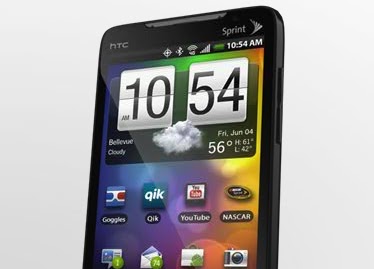
Sprint HTC 4G phone.
1. It’s fast. Sprint, the first mover in the 4G market, says its 4G is up to 10 times faster than 3G, which was introduced eight years ago. Sprint promises peak downloads of more than 10 Mbps (megabits per second), with average downloads of three to six Mbps. Verizon announced on October 6 that it plans in the fourth quarter to launch its 4G LTE (Long Term Evolution) network with downloads to range between 5 to 12 Mbps.
A closer look at the numbers, however, reveals that 4G speeds may vary. Sprint says that 4G can be 10 times faster than 3G. But read the fine print in Sprint’s promotional material: Sprint bases this claim on speed comparison between 3G’s low-end 600 kilobits per second (Kbps) vs. 4G’s max 6Mbps. Sprint notes that 3G can reach 1.7 Mbps, while 4G may drop down to 3 Mbps. So that’s less than twice as fast. We will know more specifics about Verizon’s network in the weeks ahead as it rolls out its service.

2. Regardless of how much faster 4G might be, the increased connection speed lets you do more things with your phone. Early users are already enjoying features like uninterrupted video conferencing, high-definition television streaming and of course lightning fast web surfing that smartphones on 3G networks are unable to provide. Power business users and other early adopters of the new technology who experience 4G will never want to go back.

3. Casual users mostly interested in talking, texting and occasional web surfing on their cell phones don’t need to rush into buying a 4G-enabled phone (and it is not possible to upgrade existing 3G models to the new network.) Even if you are ready to buy a phone and wanted to upgrade to 4G, the network is not available in all parts of the country (see below). It will take years for 4G to roll out into every rural area, and residents of big cities could get shut out due to big restrictions on new cell phone towers.

4. You can easily find out if 4G is available in your area. Sprint says its 4G network reaches more than 268 million people in 50 markets in the United States “and counting.” Verizon says its 4G LTE network initially will cover 100 million people in 38 markets by the end of 2010. The first markets with access to Verizon’s 4G network include Boston, New York, Washington D.C., Chicago, Miami, Atlanta, Dallas, Los Angeles, San Diego and San Francisco. Below is a full coverage map for Verizon's 4G Network.


5. 4G is more expensive. Sprint currently charges its customers with 4G-enabled devices an extra $10 per month, regardless of whether they can access a 4G network or not. With increased data usage and Verizon entering the fray, both networks are rumored to convert to “pay-as-you-go” pricing schemes rather than unlimited use packages. 4G devices will also invariably cost more - at least at first - than similar phones on the same networks.

6. Batteries take a hit on 4G. Sprint’s HTC EVO 4G can run out of battery power after only a few hours of use. While power can be conserved by switching off the 4G setting, the last thing you want to do with your new state-of-the-art smartphone is to slow it down. Extra battery packets which add to the weight of an already heavy phone can be purchased for about $100.

7. A 4G mobile hotspot can give a boost to your 3G phone. Sprint’s website displays a video showing how an iPhone user can find its 4G network and increase the iPhone’s speed. Take that AT&T. Sprint says the hotspot can work with up to five Wi-Fi-enabled devices at time: a phone, a laptop, camera, a couple music players and so on. Sprint says the Overdrive 3G/4G Mobile Hotspot by Sierra Wireless is the first dual-mode mobile hotspot on the market.

8. Sprint and Verizon are leading the way with 4G, but where’s the competition? They’re not snoozing. Kent German reported in CNET that AT&T will be busting a move into 4G next year.  AT&T Operations CEO John Stankey says the company will light up its network with LTE service by the middle of 2011. He didn’t list cities, but he says AT&T is aiming to cover between 70 million and 75 million people by the end of 2011.

9. So if you are one of those people with a need for speed or rely on your phone for multimedia business communication, it makes sense to upgrade to a 4G phone right away. Just understand the geographic restrictions in accessing the network, and be prepared to pay more in your monthly bill while also making sure to charge your phone more regularly.